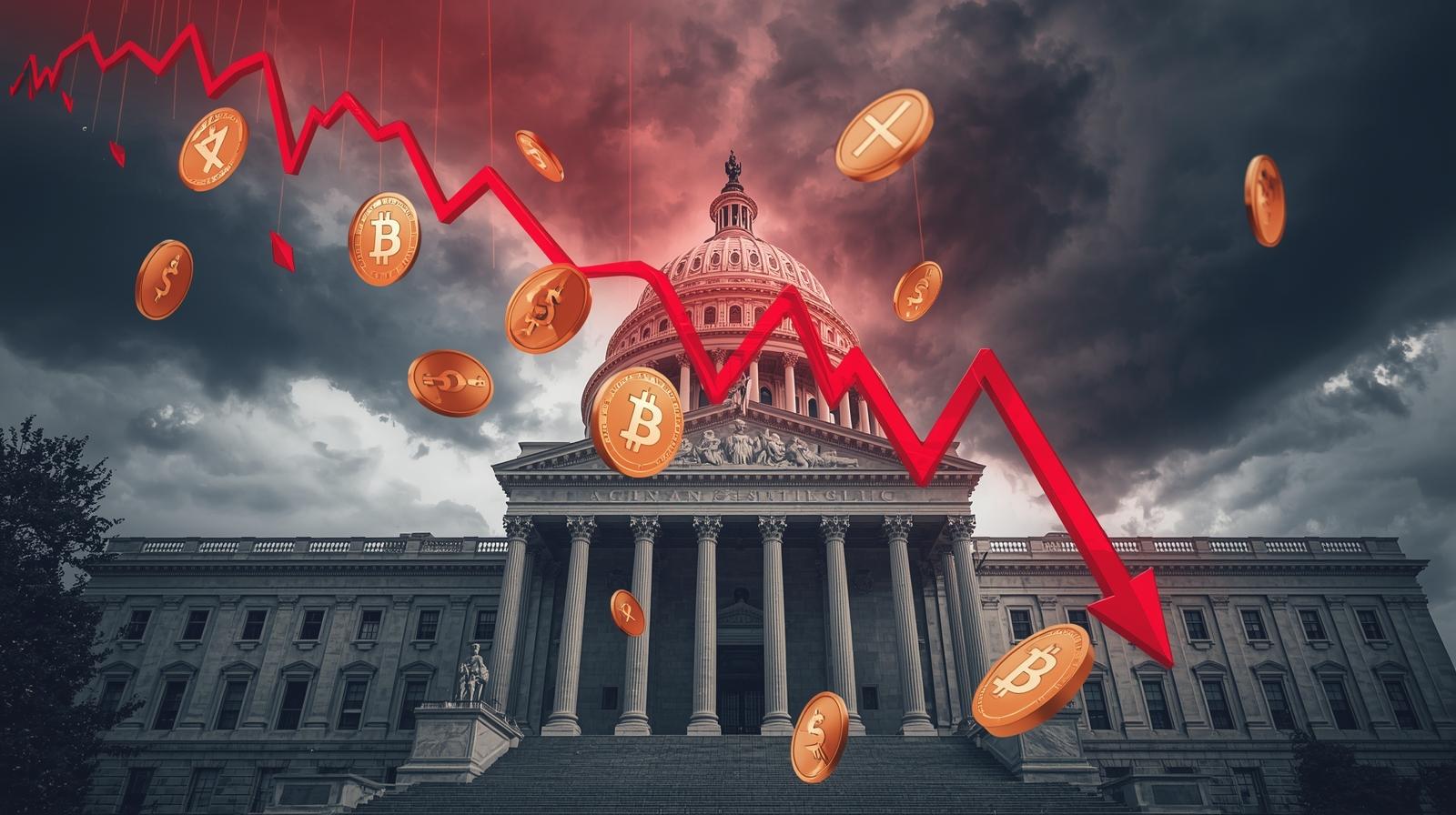
The crypto market in 2025 has been buzzing with anticipation around altcoin ETFs. 92 crypto ETF applications are pending before the U.S. Securities and Exchange Commission (SEC), and investors, institutions, and analysts are waiting for a landmark decision in October 2025. Applications for XRP, Solana, Cardano, Dogecoin, Avalanche, and other tokens have fueled speculation of a multi-billion-dollar wave of institutional adoption.
But what if the SEC surprises the market and rejects every single altcoin ETF? Such an outcome could reshape the digital asset landscape in ways both expected and unexpected. This article explores the potential consequences of a full rejection.
Market Shock and Short-Term Volatility
If the SEC rejects all altcoin ETFs in October 2025, the immediate result would likely be sharp price corrections across major altcoins. Cardano, XRP, and Solana could see double-digit drops within hours if ETF speculation continues.
Bitcoin, which already has ETF approval, might absorb institutional liquidity fleeing from rejected altcoins. This could result in a “Bitcoin dominance spike,” where BTC reclaims market share at the expense of other tokens.
However, such corrections might also open buying opportunities for retail investors who believe the long-term utility of these projects remains intact.
Institutional Confidence Takes a Hit
Institutions have been cautiously exploring altcoins through structured products like trusts and futures. A blanket rejection by the SEC would signal that regulators remain unconvinced about this coin’s maturity, security, or decentralization.
This could delay institutional adoption by several years. Hedge funds, pension funds, and asset managers who were waiting for regulated ETF products may choose to stick with Bitcoin and Ethereum ETFs only, ignoring altcoins altogether.
In other words, rejection could reinforce the narrative that altcoins are too risky for Wall Street.
Ripple Effect on XRP and Solana
Among all altcoins, XRP and Solana have been at the center of ETF speculation. With XRP, cross-border payments are made easily, while with Solana, scalability and speed are praised.
- For XRP: A rejection would undermine Ripple’s years-long legal and regulatory battles with the SEC. Many see XRP as “the first altcoin ETF candidate.” If denied, it could discourage further institutional engagement.
- For Solana: Institutional narratives around Solana as the “next Ethereum” would weaken. Without ETF support, Solana might struggle to attract large-scale capital inflows, despite its technological strengths.
Both tokens could continue thriving in retail and developer ecosystems, but they may lose momentum in the regulated investment world.
Global Regulatory Divergence
Interestingly, rejection in the U.S. does not mean the end of the story. Other regions such as Europe, Hong Kong, and Dubai are actively pushing forward with digital asset ETFs.
If the SEC rejects altcoin ETFs, it could accelerate global competition. Non-U.S. Investors and issuers may become more interested in non-U.S. markets. For example:
- Hong Kong could launch the first Solana or Cardano ETF.
- European exchanges might list diversified “altcoin baskets.”
- Middle Eastern hubs could see inflows from institutions bypassing U.S. regulations.
This divergence would highlight how crypto adoption is becoming multi-polar, with the U.S. no longer setting the only standard.
Impact on Retail Investors
Retail traders often look to ETF approvals as a validation signal. A rejection could trigger disappointment, leading to panic selling. Many small investors might exit altcoin positions entirely, thinking that institutional recognition will never come.
On the flip side, crypto veterans may see this as an opportunity. Historically, markets have overreacted to regulatory news, only to recover when fundamentals catch up. Savvy traders might accumulate undervalued altcoins after the initial crash.
The SEC’s Message to the Market
A blanket rejection would also send a strong regulatory message. The SEC might justify its decision based on:
- Concerns about decentralization (many altcoins still rely on core teams or foundations).
- Liquidity risks (thin trading volumes compared to BTC/ETH).
- Market manipulation concerns (altcoins remain highly volatile and vulnerable).
This would reinforce the perception that, in the eyes of regulators, Bitcoin and Ethereum are in a different league, while altcoins are still experimental.
Long-Term Consequences for Innovation
While rejection would hurt prices and investor sentiment, it could also push altcoin projects to strengthen their fundamentals. To win future approval, tokens may need to:
- Improve decentralization metrics.
- Increase liquidity and institutional-grade trading infrastructure.
- Demonstrate real-world utility and adoption beyond speculation.
In the long run, rejection might become a wake-up call for altcoin ecosystems to mature.
Could Rejection Lead to Consolidation?
Another fascinating scenario is industry consolidation. If smaller projects lose investor confidence, capital may concentrate in a handful of strong altcoins (XRP, Solana, Cardano). Over time, this could make the market more sustainable and less fragmented.
Conclusion
In the event that the SEC rejects all altcoin ETFs in October 2025, the short-term outlook would be difficult: price crashes, diminished institutional confidence, and the rise of Bitcoin as the dominant cryptocurrency. But in the long run, such a decision could push the industry toward greater maturity, global regulatory diversification, and innovation.
Crypto history shows that rejection is not the end it’s often the beginning of a new cycle. For investors and builders, the key will be resilience, patience, and a focus on real-world adoption.
About the Author



1 thought on “What Happens If SEC Rejects All Altcoin ETFs in October 2025?”